
Illusion: Creating Depth and Perspective in Installations

Jason Coleman · on 18 July 2026 · 8 min read · Last reviewed 18 July 2026
An illusion is a distortion of sensory perception that creates a shared false impression of reality, often used in art installations to manipulate depth and perspective.
In plain terms: Illusions in art installations are like a clever magician’s trick for the eyes, you know it’s not real, but your brain can’t help but believe what it sees.
Key facts
- Illusions exploit visual, auditory, or spatial cues to alter perception.
- They are widely used in contemporary art to create immersive experiences.
- The effect relies on shared human perceptual biases, making them universally compelling.
- Common techniques include forced perspective, anamorphosis, and trompe l’oeil.
What are art installations?
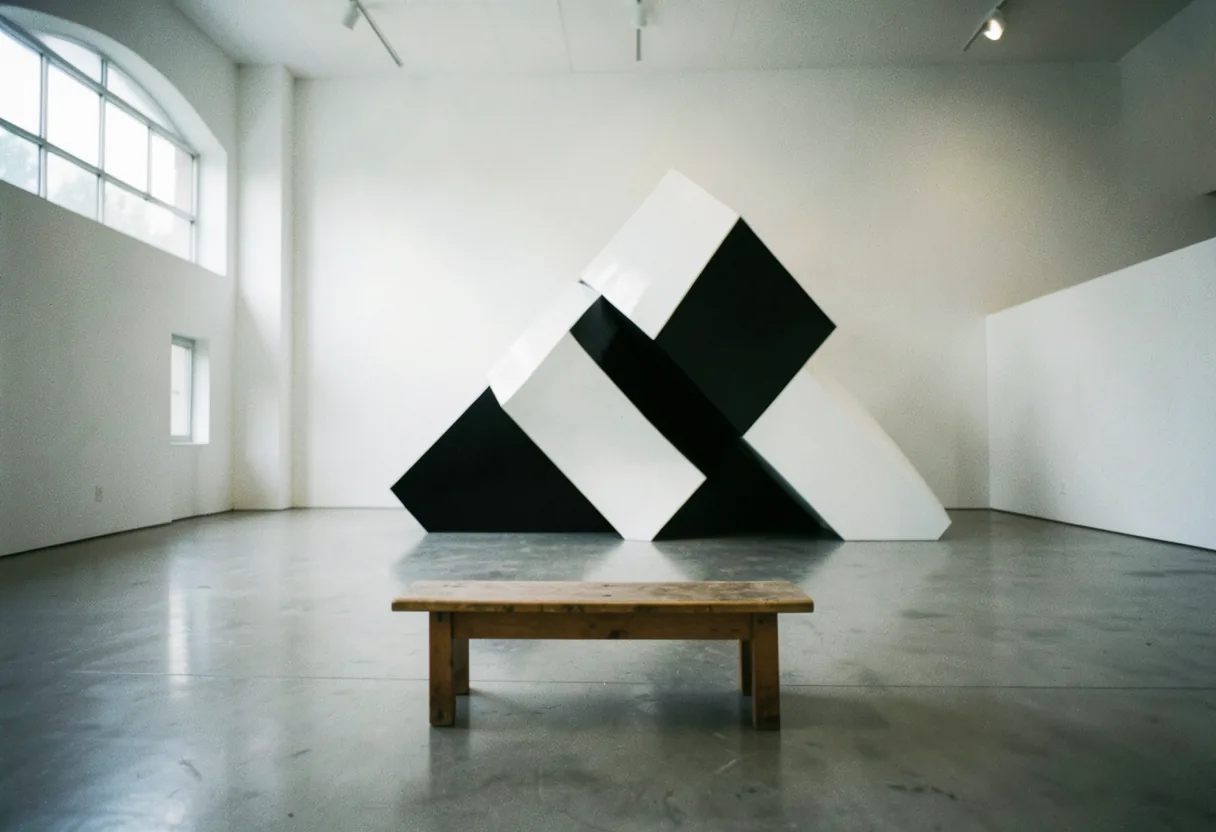
Art installations are immersive, three-dimensional artworks designed to transform a space and engage viewers on multiple sensory levels.
The first time I really looked at an installation, I was struck by how it didn’t just sit in a room, it became the room. Unlike traditional art, installations often use lighting, sound, and interactive elements to create a dynamic environment. They can range from small, site-specific works to massive, room-filling experiences.
How do illusions function in art installations?
Illusions in art installations function by manipulating visual and spatial cues to create a false sense of depth, scale, or movement.
For example, forced perspective tricks the eye into perceiving distance inaccurately, while anamorphosis distorts images so they only appear correct from a specific angle. Trompe l’oeil, meaning “deceive the eye” in French, uses realistic imagery to create the illusion of three-dimensional forms on flat surfaces. These techniques rely on how the brain processes light, color, and spatial relationships to construct a coherent image.
What are the five types of installation art?
The five types of installation art are environmental, interactive, immersive, temporal, and site-specific.
Key facts
- Environmental installations alter the physical space, such as Yayoi Kusama’s Infinity Mirror Rooms.
- Interactive installations require viewer participation, like TeamLab’s digital artworks.
- Immersive installations fully enclose the viewer, creating a 360-degree experience.
- Temporal installations exist only for a limited time, often tied to specific events.
- Site-specific installations are designed for a particular location, like Christo and Jeanne-Claude’s The Gates in Central Park.
How much does an art installation cost?
The cost of an art installation varies widely, typically ranging from $5,000 to over $1 million depending on scale, materials, and the artist’s reputation.
Small, local installations might cost between $5,000 and $50,000, while large-scale public works can exceed $1 million. Factors like materials, labor, and technology (e.g., projection mapping or interactive elements) significantly impact the budget. According to Motifs: Recurring Visual Themes in Spatial Art, contemporary artists often collaborate with engineers and architects, adding to the expense.
What is the 70-30 rule in art composition?
Art composition follows the 70-30 rule, suggesting a balance of 70% negative space and 30% positive space to create harmony and focus.
This rule directs the viewer’s focus by emphasizing the main subject while the surrounding area offers context. For instance, in a minimalist installation, 70% of the space could be left empty, with 30% filled by the artwork. What Is the 70 30 Rule in Art Composition? notes that this principle is particularly beneficial in installations where spatial awareness is crucial.
Art installations near California
California is home to several notable art installations, including the Urban Light at the Los Angeles County Museum of Art (LACMA) and the Walt Disney Concert Hall.
Urban Light, created by Chris Burden, features 202 restored cast-iron street lamps arranged in a grid. The Walt Disney Concert Hall, designed by Frank Gehry, is an architectural marvel with its stainless steel exterior. Both works manipulate light and space to create striking illusions of depth and movement.
Art installations near Texas
Texas boasts installations like the Rainbow Panther at the Dallas Arts District and the Contemporary Austin’s outdoor exhibits.
A 20-foot-tall sculpture called the Rainbow Panther by Richard Serra plays with scale and perception, making viewers feel dwarfed by its massive, curved steel forms. The Contemporary Austin’s outdoor installations, such as Color Wheel by Mel Bochner, use vibrant colors and geometric shapes to create visual illusions in the landscape.
Contemporary art installations
Contemporary art installations often blend technology, interactive elements, and unconventional materials to challenge traditional notions of art.
Artists like Olafur Eliasson use light, water, and mirrors to create immersive environments that alter perception. Eliasson’s Your Blind Passenger installation at the Tate Modern uses mist and light to distort space, making viewers question their surroundings. These works frequently address social or environmental themes, engaging viewers on both emotional and intellectual levels.
Famous art installations
Famous art installations include The Weather Project by Olafur Eliasson, The Gates by Christo and Jeanne-Claude, and Infinity Mirror Rooms by Yayoi Kusama.
A massive sun-like sphere and mist create an illusion of an artificial sky in The Weather Project, displayed at the Tate Modern. The Gates, installed in New York’s Central Park, featured 7,503 saffron-colored gates that transformed the park into a vibrant, otherworldly landscape. Kusama’s Infinity Mirror Rooms use mirrors and LED lights to create an endless, immersive experience.
Art installations for sale
Galleries, auction houses, and online platforms like Artsy or Saatchi Art offer art installations for sale.
Prices vary widely based on the artist’s reputation and the installation’s complexity. For example, smaller, site-specific works by emerging artists might sell for a few thousand dollars, while large-scale installations by established artists can command hundreds of thousands. Buyers should consider factors like installation costs, maintenance, and space requirements.
Explore this Term
Explore this Term refers to the study of how illusions and spatial manipulation are used in art installations to create engaging, thought-provoking experiences.
This exploration involves analyzing the techniques artists use to distort perception, such as forced perspective or anamorphosis. By examining famous works, like those in the motifs-recurring-themes section, viewers can appreciate how these illusions challenge and expand their view of space and reality.
Selected artworks in the collection
Selected artworks in major museum collections often feature installations that push the boundaries of perception and space.
The Museum of Modern Art (MoMA) in New York, for example, includes works like How to Build a Universe That Doesn’t Fall Apart Two Days Later by Hans Haacke. This piece uses water, light, and sound to create a constantly shifting environment. The Motifs: Recurring Visual Themes in Spatial Art section highlights how these works use illusion to engage viewers in new ways.
Past exhibitions and displays
Past exhibitions and displays of illusion-based installations have included groundbreaking shows like TeamLab: Planets and Yayoi Kusama: Infinity Mirrors.
TeamLab: Planets at the PACE Gallery in Tokyo features immersive, interactive environments where visitors walk through water and digital projections. Kusama’s Infinity Mirrors tour, which traveled to museums worldwide, used mirrors and LED lights to create infinite, mesmerizing spaces. These exhibitions demonstrate how illusion can transform a viewer’s experience of art.
History
The history of illusion in art dates back to ancient times, with early examples like the Trompe-l’œil frescoes in Greek and Roman architecture.
These techniques evolved through the Renaissance, with artists like Andrea Pozzo using forced perspective in ceiling frescoes to create the illusion of infinite space. In the 20th century, movements like Op Art and Surrealism further explored visual deception, paving the way for modern installations. Today, artists continue to innovate, blending traditional techniques with cutting-edge technology.
Installation
An installation in art refers to a site-specific, often immersive work designed to transform a physical space and engage the viewer on multiple sensory levels.
Installations can use a variety of media, including sculpture, video, light, and sound, to create a cohesive experience. Unlike traditional art, installations often require viewers to move through or interact with the space. This dynamic engagement makes them particularly effective at manipulating perception and creating illusions.
Gesamtkunstwerk
Gesamtkunstwerk, a German term meaning “total work of art,” describes an installation that unifies multiple artistic disciplines into a single, cohesive experience.
This concept, popularized by Richard Wagner, is evident in installations like Olafur Eliasson’s Your Blind Passenger, which combines light, water, and architecture. Gesamtkunstwerk installations aim to immerse viewers in a fully realized artistic vision, often using illusion to enhance the effect.
Art and Objecthood
Art and Objecthood, a concept explored by critic Michael Fried, examines how installations challenge traditional notions of art as a static, object-based form.
Fried argued that installations, by requiring viewer participation, blur the line between art and theater. However, many contemporary artists embrace this blurring, using illusion and interactivity to create new forms of engagement. For example, Rafael Lozano-Hemmer’s interactive installations use biometric data to create dynamic, ever-changing environments.
Interactive installations
Interactive installations require viewer participation to create dynamic, ever-changing experiences.
These works often use sensors, touchscreens, or motion tracking to respond to viewers in real time. For example, Body Movies by Rafael Lozano-Hemmer projects images of viewers onto surfaces, creating a shared, evolving artwork. Interactive installations use illusion to make viewers active participants rather than passive observers.
To create an illusion-based installation, start by identifying the perceptual effect you want to achieve, such as depth, scale, or movement. Next, select the appropriate techniques, like forced perspective or anamorphosis. Finally, incorporate interactive or immersive elements to enhance the experience. For example, you might use mirrors and LED lights to create an infinite space, or projection mapping to distort the viewer’s perception of the environment.
When creating an illusion-based installation, prioritize the viewer’s experience. Use techniques that engage multiple senses, such as light, sound, and touch, to create a fully immersive environment. Additionally, consider the installation’s context, whether it’s a gallery, public space, or private collection, and tailor the design to suit the setting.
Frequently asked questions
How do artists create the illusion of depth in installations?
Artists often use forced perspective, where objects are scaled to appear farther away than they are. Layering elements with varying transparency and using vanishing points can also trick the eye into perceiving depth. Lighting plays a crucial role, shadows and highlights guide the viewer’s perception of space.
What materials are commonly used to achieve perspective in installations?
Materials like mirrors, glass, and translucent fabrics are popular for bending light and creating depth. Cardboard or foam can be shaped to mimic distant objects, while digital projections add dynamic layers. The choice depends on the desired effect, realistic or abstract.
Can sound enhance the illusion of depth in installations?
Absolutely. Spatial audio, where sounds originate from specific directions, tricks the brain into perceiving distance. For example, a whisper from a "far" corner or echo effects can reinforce visual illusions. Combining visual and auditory cues creates a more immersive experience.
What’s a common mistake artists make when designing depth in installations?
Overcomplicating the design. Too many conflicting perspectives confuse the viewer. Simplicity and consistency are key. Artists should prioritize a clear focal point and gradual scaling. Testing the installation from multiple angles ensures the illusion holds up.
Related Reading
- What Are the Five Types of Installation Art?
- Complementary Colors: Mastering Contrast in Installations
- What Is the 70 30 Rule in Art Composition?
Part of the Techniques & Composition guide hub.