
Immersive Virtual Reality in Contemporary Art Installations
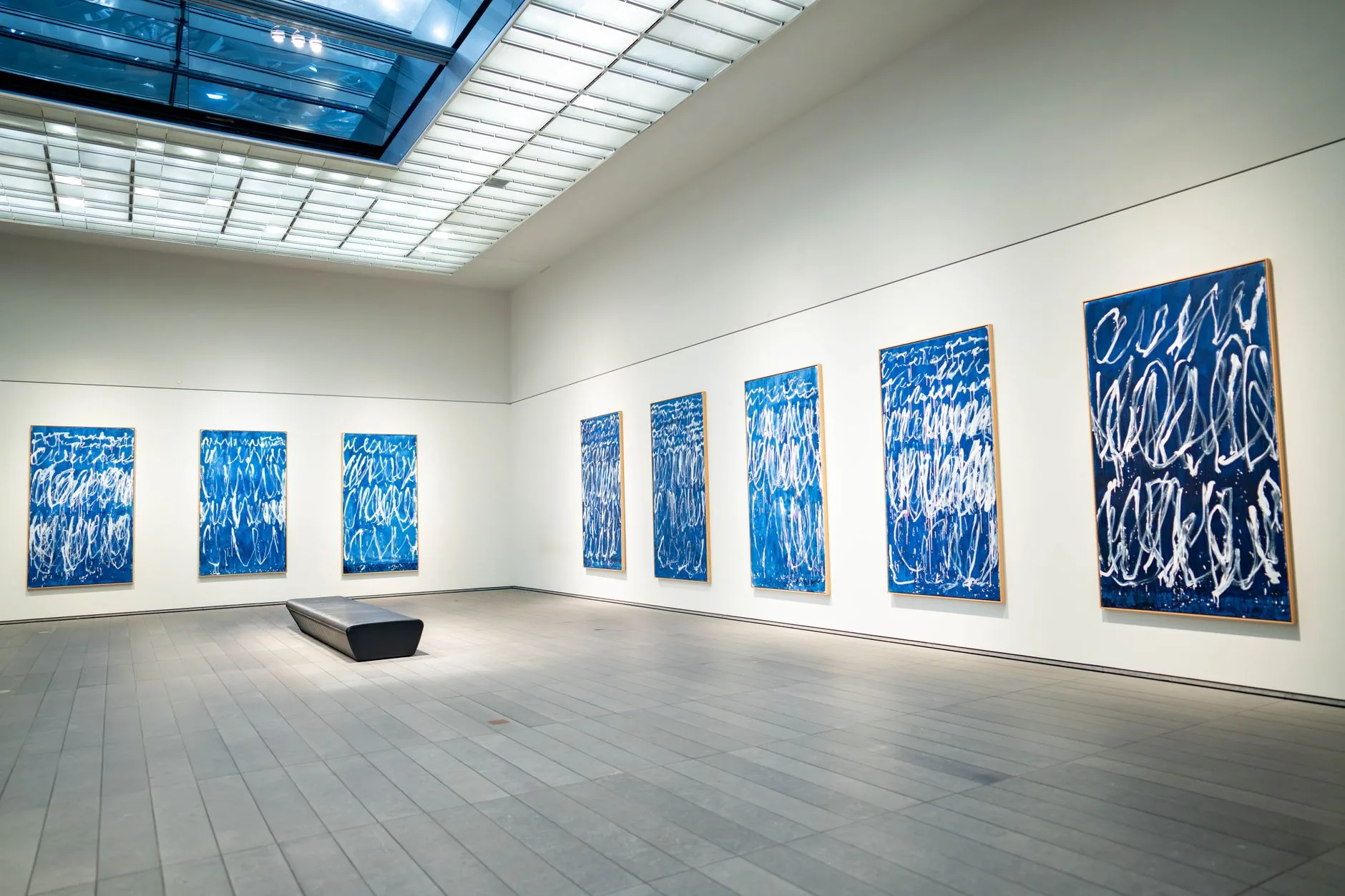
Nicole Callahan · on 18 July 2026 · 11 min read · Last reviewed 18 July 2026
Immersive virtual reality refers to a technology-driven experience that places users into a completely simulated environment, creating the perception of physical presence in a digital world.
In plain terms: Think of it as a digital dreamscape where your body isn’t physically present, but your mind is fully transported into an alternate reality, much like how a book can immerse you in a story, but VR does it with all your senses.
Key facts
- Immersive virtual reality typically requires a headset, such as the Oculus Rift or HTC Vive.
- According to Stanford University, immersive VR can trick the brain into believing the virtual environment is real.
- The market for immersive VR in art is projected to reach $5.1 billion by 2025, according to Grand View Research.
- Art installations using immersive VR often combine elements of interactive installations, contemporary art, and digital technology.
What are art installations?
Art installations are site-specific, three-dimensional works of art designed to transform a space and engage viewers on multiple sensory levels.
The first time I really looked at art installations, I was struck by how they turn entire rooms into canvases, using light, sound, and physical structures to create an environment that envelops the viewer. For example, Yayoi Kusama’s “Infinity Mirror Rooms” use mirrors and LED lights to create an illusion of infinite space, making the viewer feel as if they are floating in a galaxy of lights.
Key facts
- Art installations can range from temporary exhibits to permanent structures.
- They often incorporate a variety of media, including video, sound, and interactive elements.
- Some installations are site-specific, meaning they are designed to interact with a particular location.
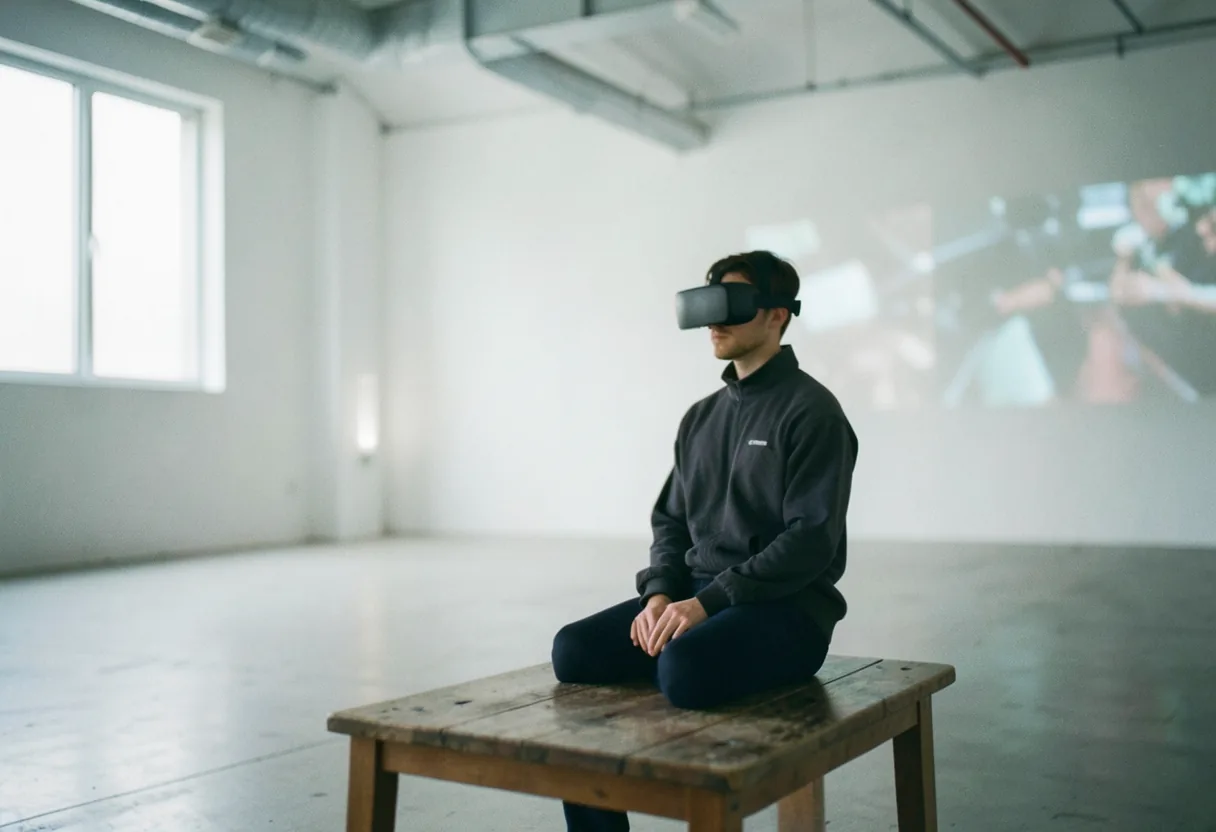
What are the five types of installation art?
The five main types of installation art are site-specific, interactive, immersive, mixed-media, and time-based installations.
Key facts
- Site-specific installations are designed to interact with a particular location, such as Christina Kubisch’s “Electrical Walks”, which uses electromagnetic induction to create soundscapes in specific urban spaces.
- Interactive installations invite viewer participation, like TeamLab’s “Borderless” exhibit in Tokyo, where digital projections respond to visitors’ movements.
- Immersive installations create a fully enveloping environment, such as Bruce Nauman’s “The Pinch”, where viewers are surrounded by distorted reflections.
- Mixed-media installations combine various materials and techniques, exemplified by Anish Kapoor’s “Cloud Gate” in Chicago, which uses stainless steel to reflect the city’s skyline.
- Time-based installations evolve over time, like Olafur Eliasson’s “The Weather Project”, which used a giant sun sculpture to create a dynamic atmosphere in the Tate Modern’s Turbine Hall.
How much does an art installation cost?
The cost of an art installation can vary widely, typically ranging from $10,000 to over $1 million, depending on the scale, materials, and artist involved.
For instance, smaller, local installations might cost around $10,000 to $50,000, while large-scale public art projects can exceed $1 million. For example, the Los Angeles County Museum of Art (LACMA) commissioned Chris Burden’s “Urban Light” for approximately $5 million, which consists of 202 restored cast-iron street lamps.
Key facts
- Smaller installations by emerging artists can cost between $10,000 and $50,000.
- Mid-sized installations by established artists might range from $100,000 to $500,000.
- Large-scale public art installations by renowned artists can exceed $1 million.
What is the 70 30 rule in art?
Art’s 70 30 rule suggests that 70% of the creative process should be spent on planning and preparation, while 30% should be allocated to execution and refinement.
This rule stresses the need for careful planning to achieve the desired outcome in the final artwork. For instance, an artist might dedicate 70% of their time to designing, material selection, and planning interactivity for an installation, with the remaining 30% allocated to construction and final tweaks.
Key facts
- The 70 30 rule is often applied to project management in various creative fields.
- It helps artists avoid costly mistakes and ensures a more efficient creative process.
- This rule is particularly relevant for large-scale installations that require extensive planning.
Art installations near California
California is home to numerous renowned art installations, including the Los Angeles County Museum of Art (LACMA) and the San Francisco Museum of Modern Art (SFMOMA).
For example, the LACMA’s “Urban Light” by Chris Burden is a iconic installation featuring 202 restored cast-iron street lamps, while the SFMOMA’s “Tunnel Vision” by Bill Fontana uses sound to create an immersive experience.
Key facts
- California hosts a variety of art installations, from public sculptures to immersive exhibits.
- The state is known for its innovative and experimental art scene.
- Many installations are located in major cities like Los Angeles, San Francisco, and San Diego.
Art installations near Texas
Texas boasts a vibrant art scene with numerous installations, such as the Dallas Museum of Art (DMA) and the Contemporary Austin.
For instance, the DMA’s “Mirrored Room” by Yayoi Kusama offers an immersive experience with its reflective surfaces and LED lights, while the Contemporary Austin’s “Rain” by Olafur Eliasson creates a mesmerizing water installation.
Key facts
- Texas has a diverse range of art installations, from contemporary exhibits to public art projects.
- The state’s art scene is influenced by its rich cultural heritage and innovative artists.
- Many installations are located in major cities like Dallas, Houston, and Austin.
Installation art examples
Installation art examples include “The Weather Project” by Olafur Eliasson, “Infinity Mirror Rooms” by Yayoi Kusama, and “The Pinch” by Bruce Nauman.
These examples showcase the diversity of installation art, from immersive environments to interactive experiences. For instance, Eliasson’s “The Weather Project” uses a giant sun sculpture to create a dynamic atmosphere, while Kusama’s “Infinity Mirror Rooms” create an illusion of infinite space with mirrors and LED lights.
Key facts
- Installation art often combines various media and techniques.
- Examples range from immersive environments to interactive experiences.
- Many installations are designed to engage viewers on multiple sensory levels.
Contemporary art installations
Contemporary art installations often push the boundaries of traditional art forms, incorporating new technologies and innovative techniques.
Teamlab’s “Borderless” exhibit in Tokyo uses digital projections that respond to visitors’ movements, creating an immersive and interactive experience. Similarly, Refik Anadol’s “Machine Hallucinations” uses data and AI to generate immersive, ever-changing digital environments.
Key facts
- Contemporary art installations often incorporate new technologies and innovative techniques.
- They are designed to engage viewers in unique and immersive ways.
- Many contemporary installations are interactive and responsive to viewer input.
Famous art installations
Famous art installations include “Cloud Gate” by Anish Kapoor, “The Gates” by Christo and Jeanne-Claude, and “The Weather Project” by Olafur Eliasson.
These installations have gained international recognition for their innovative designs and immersive experiences. For instance, Kapoor’s “Cloud Gate” in Chicago uses stainless steel to reflect the city’s skyline, while Christo and Jeanne-Claude’s “The Gates” transformed Central Park with thousands of saffron-colored gates.
Key facts
- Famous art installations often gain international recognition for their innovative designs.
- They are designed to engage viewers on multiple sensory levels.
- Many famous installations are large-scale public art projects.
Art installations for sale
Art installations for sale can be found through galleries, art fairs, and online marketplaces, with prices varying widely depending on the artist and scale of the work.
Emerging artists’ smaller installations might be available for a few thousand dollars, while renowned artists’ large-scale works can sell for millions. Platforms like Art Installations for Sale: A Buyer's Guide and contemporary art market offer a variety of options for collectors and enthusiasts.
Key facts
- Art installations for sale can be found through galleries, art fairs, and online marketplaces.
- Prices vary widely depending on the artist and scale of the work.
- Smaller installations by emerging artists might be more affordable than large-scale works by renowned artists.
Explore this Term
To explore the term “immersive virtual reality” in the context of art installations, consider visiting museums and galleries that feature VR exhibits, such as the Cymatic Water: Visualizing Sound Through Liquid and Synaesthesia: Blending Senses in Art Installations.
Interactive installations, contemporary art, and digital technology often combine in these exhibits to create immersive experiences. For example, the Evoking Joy: Feeling Joyful Through Immersive Design at the Museum of Modern Art (MoMA) in New York uses VR to create a dynamic and engaging environment that responds to visitors’ movements.
Key facts
- Immersive virtual reality in art installations often combines elements of interactive installations, contemporary art, and digital technology.
- Museums and galleries frequently feature VR exhibits that push the boundaries of traditional art forms.
- These exhibits are designed to engage viewers in unique and immersive ways.
Selected artworks in the collection
Selected artworks in the collection of major museums often include immersive virtual reality installations, such as those at the Cymatic Water: Visualizing Sound Through Liquid and Synaesthesia: Blending Senses in Art Installations.
Featuring a variety of immersive VR experiences, the Museum of Modern Art (MoMA)’s feeling-joyful-immersive-design engages viewers on multiple sensory levels. Similarly, the Cymatic Water: Visualizing Sound Through Liquid at the Los Angeles County Museum of Art (LACMA) uses VR to create dynamic and interactive environments.
Key facts
- Selected artworks in major museum collections often include immersive virtual reality installations.
- These installations are designed to engage viewers in unique and immersive ways.
- Many museums feature VR exhibits that push the boundaries of traditional art forms.
Past exhibitions and displays
Past exhibitions and displays of immersive virtual reality in art installations have showcased the evolving nature of digital art, with notable examples including “Digital Revolution” at the Barbican Centre in London and “Electric Sky” at the National Museum of Contemporary Art in Seoul.
Immersive VR experiences, from interactive environments to digital projections that respond to viewers’ movements, have been featured in exhibitions. For example, the “Digital Revolution” exhibit included works by artists like Rafael Lozano-Hemmer and TeamLab, while “Electric Sky” showcased installations by artists such as Refik Anadol and Bill Viola.
Key facts
- Past exhibitions and displays of immersive virtual reality in art installations have showcased the evolving nature of digital art.
- These exhibitions have featured a range of immersive VR experiences, from interactive environments to digital projections.
- Notable examples include “Digital Revolution” at the Barbican Centre in London and “Electric Sky” at the National Museum of Contemporary Art in Seoul.
History
Experiments with interactive and digital art in the 1960s and 1970s marked the beginning of immersive virtual reality in art installations.
Artists like Myron Krueger and Char Davies pioneered early forms of immersive VR art, using technology to create interactive environments that responded to viewers’ movements. These early experiments laid the foundation for the immersive VR installations we see today, combining elements of interactive installations, contemporary art, and digital technology.
Key facts
- The history of immersive virtual reality in art installations can be traced back to the early experiments with interactive and digital art in the 1960s and 1970s.
- Artists like Myron Krueger and Char Davies pioneered early forms of immersive VR art.
- These early experiments laid the foundation for the immersive VR installations we see today.
Installation
An installation in the context of art refers to a site-specific, three-dimensional work designed to transform a space and engage viewers on multiple sensory levels.
Yayoi Kusama’s “Infinity Mirror Rooms” create an illusion of infinite space using mirrors and LED lights, making the viewer feel as if they are floating in a galaxy of lights. Similarly, Bruce Nauman’s “The Pinch” surrounds viewers with distorted reflections, creating an immersive and disorienting experience.
Key facts
- An installation in art is a site-specific, three-dimensional work designed to transform a space.
- Installations often engage viewers on multiple sensory levels.
- Examples include Yayoi Kusama’s “Infinity Mirror Rooms” and Bruce Nauman’s “The Pinch”.
Gesamtkunstwerk
Gesamtkunstwerk, a German term meaning “total work of art,” refers to an artistic vision that synthesizes various art forms into a unified whole, often incorporating elements of architecture, music, and visual art.
Richard Wagner designed his operatic works as Gesamtkunstwerke, combining music, drama, and visual elements to create a comprehensive artistic experience. Similarly, contemporary art installations like TeamLab’s “Borderless” exhibit in Tokyo use digital projections, sound, and interactive elements to create an immersive Gesamtkunstwerk.
Key facts
- Gesamtkunstwerk refers to an artistic vision that synthesizes various art forms into a unified whole.
- It often incorporates elements of architecture, music, and visual art.
- Examples include Richard Wagner’s operatic works and TeamLab’s “Borderless” exhibit.
Art and Objecthood
Looking at the relationship between art and its physical presence in space, often in the context of minimalist and installation art, Michael Fried’s concept of Art and Objecthood emerged in the 1960s.
Fried’s essay “Art and Objecthood” critiques minimalist art for emphasizing the physical object and its relationship to the viewer’s body. Similarly, contemporary installation art often explores the boundaries between art and objecthood, using immersive environments and interactive elements to challenge traditional notions of art and its physical presence.
Key facts
- Art and Objecthood examines the relationship between art and its physical presence in space.
- It is often explored in the context of minimalist and installation art.
- Examples include Michael Fried’s essay “Art and Objecthood” and contemporary installation art.
Interactive installations
Interactive installations invite viewer participation, using technology and design to create dynamic and engaging experiences.
Teamlab’s “Borderless” exhibit in Tokyo uses digital projections that respond to visitors’ movements, creating an immersive and interactive environment. Similarly, Rafael Lozano-Hemmer’s “Pulse Room” installation uses heart rate sensors to control a grid of hanging light bulbs, creating a dynamic and participatory experience.
Key facts
- Interactive installations invite viewer participation.
- They use technology and design to create dynamic and engaging experiences.
- Examples include TeamLab’s “Borderless” exhibit and Rafael Lozano-Hemmer’s “Pulse Room”.
To craft a captivating virtual reality art installation, begin by pinpointing the central idea and theme. Then, select the right technology, like VR headsets or interactive sensors. Proceed to design the environment and interactive features, making sure they match the overall theme. Lastly, test and polish the installation to deliver an engaging experience.
Immersive virtual reality in art installations offers a unique and engaging way to experience art, combining elements of interactive installations, contemporary art, and digital technology. By
Frequently asked questions
How does virtual reality enhance contemporary art installations?
VR immerses viewers in 360-degree environments, enabling interaction with art beyond traditional boundaries. Artists use VR to create dynamic, multi-sensory experiences. For example, in 'The Treachery of Sanctuary' by Mariko Mori, viewers walk through a digital forest, blending nature and technology.
What technical challenges do artists face with VR installations?
Latency, resolution, and user comfort are critical. High-end VR requires powerful hardware to render detailed, realistic scenes. Artists must balance visual fidelity with smooth performance. For instance, 'Carne y Arena' by Alejandro G. Iñárritu uses motion-capture technology to create an emotive, immersive experience without technical glitches.
Can VR art installations be experienced without VR headsets?
Some artists design hybrid installations. Viewers might see projections or screens displaying the VR environment. For example, 'Sun Lady' by TeamLab combines VR elements with physical projections, allowing non-VR viewers to experience the art in a different form.
What future trends might shape VR in art installations?
Advancements in haptic feedback, eye-tracking, and AI could make VR art more interactive. Artists might integrate real-time data, like weather or social media, into installations. For example, 'Borderlands' by Rachel Rossin uses VR to explore themes of identity and space, hinting at future possibilities.
Related Reading
- Synaesthesia: Blending Senses in Art Installations
- Evoking Joy: Feeling Joyful Through Immersive Design
- Top Interactive Art Museums Shaping the Scene
Part of the Immersive & Sensory guide hub.