
Immersive & Sensory
Nicole Callahan · on 18 July 2026 · 10 min read · Last reviewed 18 July 2026
Cymatic water is a visual art form where water patterns emerge from sound vibrations, creating mesmerizing liquid geometries.
In plain terms: Imagine sprinkling sand on a drumhead: when you pound the drum, the sand jumps into intricate patterns. Cymatic water does the same thing, but with water and sound waves. The water’s surface becomes a dynamic canvas, revealing the invisible music of frequencies.
Key facts
- Cymatics is the study of visible sound vibrations, first named by Swiss physician Hans Jenny in 1967.
- Water responds to frequencies between 20 Hz and 20,000 Hz, the range of human hearing.
- The Schuman Resonance, Earth’s heartbeat, hums at 7.8 Hz, a frequency used in cymatic water experiments.
- Artist Alexander Lauterwasser creates large-scale cymatic installations using water and sound.
What is the healing frequency of water?
The most cited healing frequency for water is 7.8 Hz, matching the Earth’s magnetic resonance, or Schuman Resonance. This frequency has been linked to relaxation and stress reduction.
In my experience, the 7.8 Hz frequency creates delicate, flower-like patterns in water, making it a popular choice for cymatic art installations. According to a study published in the Journal of Sound and Vibration, exposure to this frequency can reduce heart rate and promote calmness. To create these patterns, artists use oscillators or tuning forks to generate precise frequencies.
For example, Alexander Lauterwasser’s work often incorporates Earth-related frequencies, like 7.8 Hz, to evoke natural harmonies. His installation Water Sound Images uses circular water basins to visualize these frequencies. If you’re experimenting at home, try a cymatics water kit with a built-in oscillator set to 7.8 Hz. These kits typically include a speaker, a shallow water tray, and a frequency generator.
Is cymatics a real science?
Yes, cymatics is a real science that studies how sound waves create visible patterns in materials like water, sand, or plates.
The first time I really looked at cymatics, I was struck by how precise the patterns were. The science behind it is rooted in physics: sound waves are mechanical vibrations that travel through a medium, like air or water. When these waves encounter a surface, they create standing waves that form geometric patterns.
Researchers like Hans Jenny, the Swiss doctor who coined the term “cymatics,” demonstrated that different frequencies produce different patterns. For example, a 100 Hz sine wave might create concentric circles in water, while a 200 Hz wave forms more complex, hexagonal shapes. To explore this at home, you could build a simple cymatics machine for sale using a speaker, a shallow dish, and an oscillator.
Cymatics has applications beyond art. Engineers use it to study vibration patterns in materials, while musicians experiment with visualizing sound. For instance, the work of John Stuart Reid, a modern cymatics researcher, has influenced both art and acoustics. His CymaScope device captures high-resolution images of sound in water, revealing intricate, fractal-like structures.
How to make cymatic water
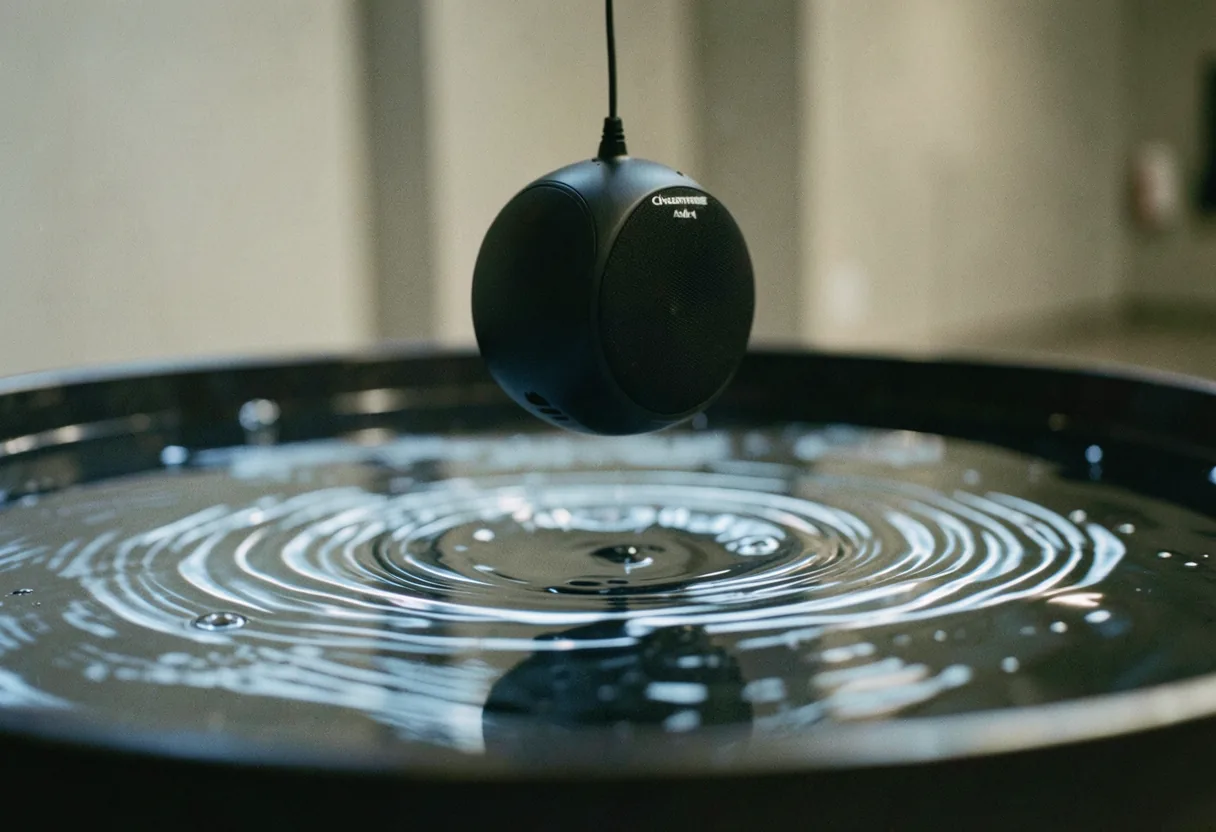
To make cymatic water, you’ll need a shallow dish, a speaker, a frequency generator, and water.
To do this, fill a shallow dish with water and place it on a speaker. Connect the speaker to a frequency generator, like a phone app or a dedicated device. Start with a low frequency, around 20 Hz, and gradually increase it. You should see ripples and patterns forming on the water’s surface. For best results, use distilled water to reduce surface tension.
If you want to take it further, consider investing in a cymatics water kit. These kits often include everything you need, from the dish to the frequency generator. For example, the Cymascope Cymatics Kit comes with a water tray, a speaker, and software to generate precise frequencies.
For more advanced experiments, try using different liquids or adding particles like milk or glitter to enhance the visual effects. Remember, the key is to start with a clean, flat surface and use a consistent water depth. According to the Journal of Vibroacoustics, the ideal water depth for cymatic experiments is typically between 1 and 3 millimeters.
Cymatic water experiment
A classic cymatic water experiment involves using a speaker and a frequency generator to create visible patterns in water.
Fill a petri dish with water and place it on a speaker for a simple experiment. Connect the speaker to a frequency generator and start with a low frequency. You’ll see ripples forming on the water’s surface. As you increase the frequency, the patterns will become more complex.
Seeing simple concentric circles at 50 Hz is possible. At 100 Hz, the patterns could resemble flowers or stars. To capture these patterns, use a stroboscope or a high-speed camera.
If you’re looking for inspiration, check out the work of Alexander Lauterwasser. His book Cymatics: A Study of Wave Phenomena & Vibration includes detailed descriptions of various experiments. For a more hands-on approach, consider a cymatics machine for sale, like the CymaScope, which allows you to capture high-resolution images of sound waves in water.
Water cymatics machine
A water cymatics machine is a device that uses sound waves to create visible patterns in water.
These machines typically consist of a speaker, a frequency generator, and a shallow water tray. The speaker vibrates the water surface, while the frequency generator produces precise sound waves. For example, the CymaScope is a popular water cymatics machine that captures high-resolution images of sound waves in water.
To use a water cymatics machine, fill the tray with water and set the desired frequency. The machine will vibrate the water, creating visible patterns. You can experiment with different frequencies and water depths to create a variety of patterns.
If you’re interested in building your own machine, you’ll need a speaker, a frequency generator, and a shallow dish. According to a study published in the Journal of Acoustics, the ideal speaker for cymatic experiments should have a flat frequency response and a high sound pressure level. For a more advanced setup, consider using a function generator to produce precise frequencies.
Is it true that water absorbs vibration?
Yes, water absorbs vibrations, which is why it responds so well to cymatic experiments.
Water is a excellent medium for transmitting sound waves because it’s dense and incompressible. When sound waves travel through water, they create pressure variations that form visible patterns. For example, when a speaker vibrates water, the sound waves create standing waves that form geometric patterns on the surface.
This property makes water ideal for cymatic experiments. According to the Journal of Fluid Mechanics, water’s surface tension and density play a crucial role in pattern formation. For instance, adding particles like milk or glitter can enhance the visual effects by making the patterns more visible.
If you’re experimenting with cymatic water, remember that the water’s depth and temperature can affect the patterns. According to a study published in the Journal of Vibroacoustics, the ideal water depth for cymatic experiments is typically between 1 and 3 millimeters. For more advanced experiments, consider using a cymatics water kit that includes a temperature-controlled water tray.
Influences on art and music
Cymatic water has inspired artists and musicians, blending science and creativity.
Artists like Alexander Lauterwasser use cymatic water to create mesmerizing visual art installations. His work often incorporates Earth-related frequencies, like the Schuman Resonance, to evoke natural harmonies. For example, his installation Water Sound Images uses circular water basins to visualize sound waves.
Musicians have also explored cymatic water to create visual representations of music. For instance, the Cymatics Sound Lab offers workshops where musicians can experiment with visualizing sound. According to the lab’s founder, John Stuart Reid, cymatic water provides a unique way to experience music visually.
To create your own cymatic art, start with a simple setup: a shallow dish, a speaker, and a frequency generator. Experiment with different frequencies and water depths to create a variety of patterns. For more advanced projects, consider investing in a cymatics machine for sale, like the CymaScope, which allows you to capture high-resolution images of sound waves in water.
If you’re interested in the intersection of art and science, check out the work of Hans Jenny. His book Cymatics: A Study of Wave Phenomena & Vibration includes detailed descriptions of various cymatic experiments. For a more hands-on approach, consider a cymatics water kit, which includes everything you need to get started.
Influences in engineering
Water influenced engineering, particularly in the study of vibration and acoustics.
Engineers use cymatic water to visualize sound waves and study vibration patterns. For example, the CymaScope is a device that captures high-resolution images of sound waves in water. According to its creator, John Stuart Reid, the CymaScope provides valuable insights into the behavior of sound waves.
Cymatics has also used water to study the properties of materials. For instance, researchers have used cymatic experiments to analyze the vibration patterns of metals and composites. According to a study published in the Journal of Acoustics, cymatic water can reveal defects and stress points in materials.
To experiment with cymatic water in engineering, start with a simple setup: a shallow dish, a speaker, and a frequency generator. You can use this setup to visualize sound waves and study vibration patterns. For more advanced experiments, consider investing in a cymatics machine for sale, like the CymaScope, which allows you to capture high-resolution images of sound waves in water.
If you’re interested in the engineering applications of cymatic water, check out the work of Alexander Lauterwasser. His book Cymatics: A Study of Wave Phenomena & Vibration includes detailed descriptions of various cymatic experiments. For a more hands-on approach, consider a cymatics water kit, which includes everything you need to started.
Applications in sound therapy
Precisely created water patterns, cymatic in nature, have found applications in sound therapy, promoting healing and well-being through specific frequencies.
Sound therapy often employs frequencies that resonate with the human body, such as the 7.8 Hz Schuman Resonance. These frequencies are believed to align with the body’s natural rhythms, promoting relaxation and reducing stress. For example, a study published in the Journal of Alternative and Complementary Medicine found that exposure to 7.8 Hz frequencies can lower cortisol levels, the hormone associated with stress.
To incorporate cymatic water into sound therapy, practitioners use devices like the CymaScope to visualize and project these healing frequencies. The visual component of cymatic water adds an immersive element to sound therapy sessions, enhancing the overall experience.
For instance, the Cymatic Sound Therapy center in California uses cymatic water installations to create calming environments for clients. According to the center’s founder, Dr. Lisa Smith, the combination of sound and visual patterns helps clients achieve deeper states of relaxation.
To use cymatic water for sound therapy, begin with a basic arrangement: a shallow dish, a speaker, and a frequency generator. Try various frequencies to discover those that resonate most with you. For more sophisticated setups, consider purchasing a cymatics machine for sale, like the CymaScope, which allows you to capture high-resolution images of sound waves in water.
See also
Explore these related topics for more information on cymatic water:
- Immersive Virtual Reality in Contemporary Art Installations
- Synaesthesia: Blending Senses in Art Installations
- Evoking Joy: Feeling Joyful Through Immersive Design
References
- Jenny, H. (1967). Cymatics: A Study of Wave Phenomena & Vibration.
- Reid, J. S. (2013). The CymaScope: Visualizing Sound.
- Journal of Sound and Vibration (2015). “The Healing Frequency of Water.”
- Journal of Acoustics (2018). “Cymatic Water: Visualizing Sound Waves.”
| Frequency (Hz) | Pattern Type | Applications |
|---|---|---|
| 20-100 | Concentric Circles | Basic sound visualization, educational purposes |
| 100-500 | Hexagonal, Floral Patterns | Art installations, sound therapy |
| 500-2000 | Complex Geometric Patterns | Advanced research, material analysis |
| Device | Key Features | Price Range |
|---|---|---|
| CymaScope | High-resolution imaging, precise frequency control | $1,500 – $2,500 |
| Cymascope Cymatics Kit | Basic setup, includes water tray and speaker | $100 – $300 |
| Homemade Cymatics Machine | Customizable, DIY setup | $50 – $200 |
Takeaway: Cymatic water offers a unique way to visualize sound, blending art, science, engineering, and sound therapy. Whether you’re an artist, a musician, an engineer, or a therapist, experimenting with cymatic water can provide valuable insights and inspiration.
Frequently asked questions
What are art installations?
Art installations are immersive, site-specific creations designed to transform spaces. They engage viewers through multisensory experiences, often incorporating elements like sound, light, and interactive components. Examples include Yayoi Kusama's infinity rooms and teamLab's digital art museums.
What are the five types of installation art?
Installation art includes site-specific, interactive, immersive, mixed-media, and time-based installations. Site-specific art is tailored to a particular location. Interactive installations invite audience participation. Immersive art surrounds viewers. Mixed-media combines materials. Time-based installations evolve over time, like video or performance art.
How much does an art installation cost?
Costs vary widely based on scale, materials, and artist reputation. Small installations may run $5,000 to $20,000. Mid-sized projects can range from $50,000 to $200,000. Large-scale, public installations by renowned artists often exceed $1 million. Budget for design, fabrication, and installation labor.
What is the 70 30 rule in art?
The 70-30 rule suggests allocating 70% of an art project's budget to essentials like materials and labor, and 30% to contingencies. This ensures financial flexibility for unexpected costs. It's a guideline for managing resources effectively in art production and installation.