
Exploring Media in Contemporary Artworks
Nicole Callahan · on 18 July 2026 · 10 min read · Last reviewed 18 July 2026
What is media in artwork is the focus here. Media in artwork are the materials or techniques artists use to create visual expressions, from traditional paint and sculpture to digital and interactive elements.
In plain terms: Think of media in artwork as the ingredients in a chef’s dish, each one brings its own flavor and texture, whether it’s the bold strokes of oil paint, the delicate fibers of textile, or the dynamic glow of digital projections.
Key facts
- Media in artwork can be physical (e.g., paint, wood, metal) or digital (e.g., video, software).
- Contemporary art installations often combine multiple media for layered effects.
- According to the Smithsonian American Art Museum, the choice of media can significantly influence an artwork’s emotional impact.
- Interactive media in art encourage audience engagement, blurring the line between artist and viewer.
What is media in artwork installations
Art installations are immersive, site-specific works that transform spaces into experiential environments, often using mixed media to convey complex themes.
The first time I really looked at an art installation, I was struck by how it rewired my perception of the space around me. Unlike traditional art that hangs on a wall, installations pull you in, making you part of the narrative.
Art installations can range from small, intimate pieces to large-scale, room-filling creations. They often incorporate elements such as lighting, sound, and even scent to create a multi-sensory experience. These works are not just about visual aesthetics; they are about creating an atmosphere or telling a story. One of the most famous examples is Yayoi Kusama’s “Infinity Mirror Rooms,” where visitors are enveloped in a world of endless reflections, creating a sense of infinite space. Another notable work is teamLab’s “Borderless” digital art museum in Tokyo, where projections flow smoothly across walls, floors, and even over visitors.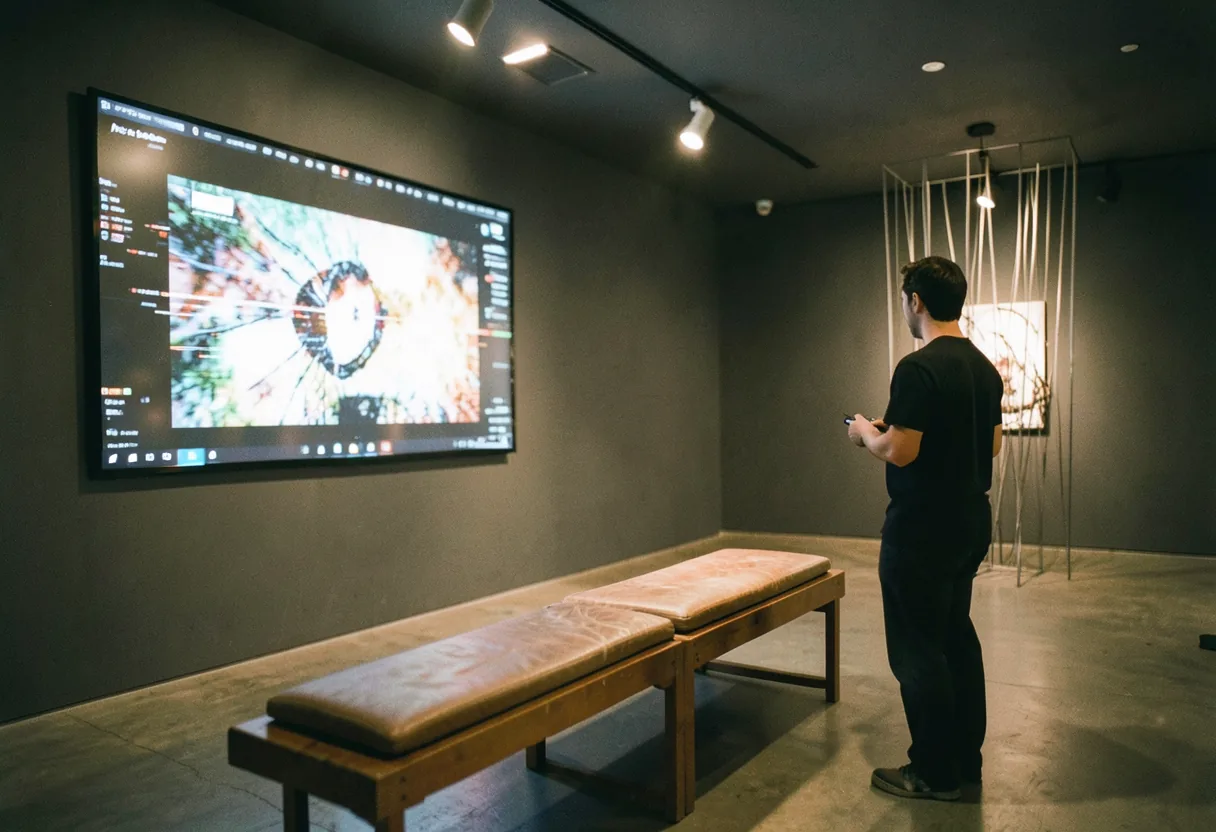
What are the five types of installation art?
The five main types of installation art are environmental, interactive, immersive, temporal, and participatory installations.
Environmental installations focus on transforming the physical space, often using natural or found materials. Interactive installations invite audience participation, using technology like sensors or touchscreens. Immersive installations create a fully enveloping experience, such as virtual reality environments. Temporal installations are time-based, like performances or projections that change over time. Participatory installations encourage viewers to contribute to the artwork, blurring the line between creator and audience. For example, the environmental installation “The Weather Project” by Olafur Eliasson, displayed at the Tate Modern, used lights and mirrors to create an artificial sun. Interactive installations like Rafael Lozano-Hemmer’s “Pulse Room” use biometric sensors to create a dynamic light display based on visitors’ heartbeats. Immersive installations like teamLab’s “Floating Flower Garden” fill entire rooms with digital flowers that respond to movement. Temporal installations like “The Clock” by Christian Marclay are time-based, showing 24 hours of movie clips synchronized to real time. Participatory installations like “Wish Tree” by Yoko Ono invite visitors to write their wishes on tags and tie them to a tree.How much does an art installation cost?
Art installations can range from a few thousand dollars for small-scale works to millions for large-scale, site-specific projects.
The cost of an art installation depends on various factors, including the materials used, the artist’s reputation, the complexity of the design, and the venue. For example, a small, temporary installation in a gallery might cost between $5,000 and $50,000, while a large-scale, permanent installation in a public space could cost hundreds of thousands or even millions of dollars. According to Common Artistic Mediums Used by Installers, materials like metal, wood, and digital projections significantly impact the budget. For instance, the installation “The Sun” by Anthony McCall, which uses a hazer and light to create ethereal forms, costs around $50,000 to create and install. On the other end of the spectrum, the “Cloud Gate” sculpture by Anish Kapoor, also known as “The Bean” in Chicago, cost over $23 million to complete.What is the 70 30 rule in art?
Composition accounts for 70% of an artwork’s impact according to the 70 30 rule in art, with the remaining 30% coming from the media used.
This rule highlights how design and structure contribute to creating a compelling artwork. While the choice of media is crucial, it is the arrangement of elements, line, shape, color, and space, that often determines the artwork’s success. For example, in Pablo Picasso’s “Guernica,” the stark black and white composition and the chaotic arrangement of figures convey the horror of war far more powerfully than the actual materials used.Art installations near California
California is home to numerous renowned art installations, from urban centers to coastal landscapes.
Los Angeles, for instance, hosts the “Urban Light” installation by Chris Burden at the Los Angeles County Museum of Art (LACMA), featuring 202 restored street lamps. In San Francisco, the “Wave Organ” by Peter Richards is a unique sound installation on a pier in the San Francisco Bay. Near San Diego, the “Kumeyaay Garden” at the San Diego Zoo is an interactive installation that celebrates native culture and ecology.Art installations near Texas
Texas boasts a vibrant art scene with several notable installations, particularly in cities like Houston and Dallas.
In Houston, the “James Turrell Skyspace” at the Rice University Art Gallery offers a meditative experience through light and space. The “Dallas Museum of Art” features “The Dallas Horizon” by Jim Hodges, a large-scale installation that transforms the museum’s atrium with reflective materials. In Austin, the “Garden of Eden” by Danny Lyon at the South By Southwest (SXSW) festival is an annual interactive installation that blends art and technology.Installation art examples
Installation art examples include works by renowned artists like Yayoi Kusama, Olafur Eliasson, and teamLab.
Yayoi Kusama’s “Infinity Mirror Rooms” create a sense of infinite space using mirrors and LED lights. Olafur Eliasson’s “The Weather Project” at the Tate Modern uses lights and mirrors to simulate the sun. teamLab’s “Borderless” digital art museum in Tokyo is an immersive experience where projections flow across walls, floors, and even over visitors.Contemporary art installations
Contemporary art installations often push the boundaries of traditional art forms, incorporating new technologies and interactive elements.
Artists like teamLab and Rafael Lozano-Hemmer are at the forefront of this movement. teamLab’s “Floating Flower Garden” creates a dynamic, interactive environment where digital flowers respond to visitors’ movements. Rafael Lozano-Hemmer’s “Pulse Room” uses biometric sensors to create a light display based on visitors’ heartbeats.Famous art installations
Famous art installations include works like “The Weather Project” by Olafur Eliasson and “Infinity Mirror Rooms” by Yayoi Kusama.
Olafur Eliasson’s “The Weather Project” at the Tate Modern is renowned for its immersive simulation of the sun. Yayoi Kusama’s “Infinity Mirror Rooms” create a mesmerizing experience of infinite reflections. Another famous installation is “The Clock” by Christian Marclay, a 24-hour video montage synchronized to real time.Art installations for sale
Galleries, art fairs, and online platforms like Artsy and Saatchi Art offer art installations for sale.
Galleries such as Welcome to Recollection Quartett: Installation Art Guide often feature a range of installation artworks for sale, from emerging artists to established names. Art fairs like Art Basel and Frieze also offer opportunities to purchase unique installations. Online platforms like Artsy and Saatchi Art provide a convenient way to browse and buy installation art from the comfort of your home.Explore this Term
To explore the term “media in artwork,” it’s essential to understand how different materials and techniques contribute to the overall impact of an artwork.
Media in artwork can be physical, such as paint, sculpture, or textile, or digital, like video, software, or interactive technology. Each medium brings its unique characteristics and challenges. For example, oil paint offers rich textures and vibrant colors, while digital media allows for dynamic, interactive experiences.Selected artworks in the collection
Selected artworks in the collection of major museums often include notable installation pieces.
The Museum of Modern Art (MoMA) in New York features works like “The Fountain” by Marcel Duchamp and “Museum as Muse” by Michael Heizer. The Tate Modern in London houses installations like “The Weather Project” by Olafur Eliasson and “The Physical Impossibility of Death in the Mind of Someone Living” by Damien Hirst.Past exhibitions and displays
Past exhibitions and displays of installation art often showcase the evolution of this dynamic art form.
The Venice Biennale, one of the most prestigious art exhibitions in the world, has featured numerous installation artworks over the years. The Documenta exhibition in Kassel, Germany, is another major event that showcases cutting-edge installation art. These exhibitions provide a platform for artists to experiment with new media and techniques.History
Installation art has a rich history dating back to the early 20th century.
The origins of installation art can be traced to movements like Dada and Surrealism, which sought to challenge traditional art forms. Artists like Marcel Duchamp and Salvador Dalí pioneered the use of unconventional materials and site-specific works. In the 1960s and 1970s, installation art gained prominence with artists like Yayoi Kusama and Joseph Beuys pushing the boundaries of traditional art.Installation
Transforming spaces into immersive environments, installation art is a site-specific form of art.
The key characteristic of installation art is its ability to engage the viewer on multiple sensory levels. Unlike traditional art forms that are viewed from a distance, installations invite the viewer to step into the artwork and become part of the experience. This interactive element makes installation art particularly powerful and engaging.Gesamtkunstwerk
Gesamtkunstwerk, or “total work of art,” is a concept that emphasizes the integration of all artistic disciplines into a single, cohesive work.
This concept was popularized by Richard Wagner in the 19th century and has influenced many contemporary artists. Installation art often embodies the principles of Gesamtkunstwerk by combining visual, auditory, and tactile elements to create a holistic experience.Art and Objecthood
Examining the relationship between art and its physical form, this concept explores their connection.
This concept was famously discussed by art critic Michael Fried in his 1967 essay “Art and Objecthood.” Fried argued that installation art, with its emphasis on site-specificity and viewer engagement, challenges traditional notions of art as an autonomous object. Instead, installation art often blurs the line between art and life, creating a more dynamic and interactive experience.Interactive installations
Interactive installations use technology to engage the viewer, often incorporating sensors, touchscreens, or biometric data.
These installations create a dialogue between the artwork and the viewer, making the experience more personal and engaging. For example, Rafael Lozano-Hemmer’s “Pulse Room” uses biometric sensors to create a light display based on visitors’ heartbeats. This interactive element makes the artwork more than just a visual experience; it becomes a shared moment between the artist and the viewer.How to choose the right media for your art installation
To choose the right media for your art installation, consider the theme, space, and desired audience experience.
First, think about the message you want to convey. Different media can evoke different emotions and reactions. For example, if you want to create a calming atmosphere, you might use soft, natural materials like wood or fabric. If you want to create a sense of wonder, you might incorporate digital projections or light installations. Next, consider the space where the installation will be displayed. The size, shape, and lighting of the space can all influence your choice of media. For example, a small, dimly lit room might be ideal for a light installation, while a large, open space could accommodate a more complex, multi-media piece. Finally, think about your audience. Who are they, and what kind of experience do you want them to have? Interactive installations might be ideal for a younger audience, while more traditional media might appeal to an older demographic.Final Thoughts
Understanding media in artwork is crucial for appreciating the depth and complexity of contemporary art installations.
Whether you’re an artist, a collector, or simply an art enthusiast, looking at the various media used in art installations can enhance your understanding and enjoyment of these works. From traditional materials like paint and sculpture to cutting-edge digital technologies, the choice of media plays a vital role in shaping the artwork’s impact and emotional resonance. So next time you encounter an art installation, take a moment to consider the media used and how they contribute to the overall experience. You might find yourself discovering a whole new layer of appreciation for these immersive, site-specific works.Frequently asked questions
How has digital media transformed contemporary art?
Digital media introduced dynamic interactivity. Artists like Rafael Lozano-Hemmer use real-time audience participation, like his 'Pulse Room' where heartbeats trigger light pulses. This shifts art from static objects to evolving experiences.
What role does social media play in contemporary art?
Platforms like Instagram democratize art access. Artists such as Amalia Ulman blur lines between real life and performance art through curated social media narratives, challenging traditional exhibition spaces.
How do artists use virtual reality in contemporary works?
VR creates immersive environments. TeamLab's 'Borderless' exhibition in Tokyo employs VR to dissolve boundaries between viewer and artwork, fostering sensory overload and emotional engagement.
What challenges arise when incorporating new media in art?
Technological obsolescence risks rendering artworks unviewable. Conservators like Julia Noordegraaf advocate for documentation and emulation strategies to preserve interactive installations over time.
Related Reading
- Welcome to Recollection Quartett: Installation Art Guide
- Common Artistic Mediums Used by Installers
- Evoking Joy: Feeling Joyful Through Immersive Design